

As a science-based interior designer, I’m wildly passionate about the measurable benefits of art, beauty, and design. But whenever I mention terms like neuroaesthetics or biophilic design, I often see the same look: a slight cock of the head, a polite pause, and then—“bio-what?”
I understand. These words can feel academic at first. But what they describe is deeply human.
Before you tune out, what if I told you that your home may be one of the most overlooked wellness tools in your life? Not a magic cure. Not a literal fountain of youth. But a powerful, everyday environment that can either support your nervous system—or quietly work against it.
That matters because we spend so much of our lives indoors. The U.S. Environmental Protection Agency notes that people spend about 90% of their time inside, which means our homes, offices, and built environments are not just backdrops to our lives. They are active participants in how we feel, focus, rest, connect, and recover.
At Living Luxury Lab, this is the heart of our work: creating personalized, science-backed spaces that help you feel Whole at Home®. Our mission is to harmonize design principles with your unique story, transforming homes into restorative havens that support your life as beautifully as they reflect it.
What Is Neuroaesthetics?
Neuroaesthetics is the study of how the brain responds to beauty, art, sensory experiences, and designed environments. Said more simply: it explores what happens inside us when we encounter something we perceive as beautiful, meaningful, calming, intriguing, or awe-inspiring.
In interior design, applied neuroaesthetics asks questions such as:
How does this room make the body feel?
Does this layout support ease or create friction?
Do the colors, textures, lighting, and forms help the mind settle—or do they create subtle stress?
Does the space feel coherent, personal, and safe?
Neuroaesthetics moves design beyond “pretty” and into the realm of lived experience. It recognizes that beauty is not superficial. Beauty can be biological. It can shape emotion, attention, memory, and even how connected we feel to ourselves and others. Research in neuroscience and architecture increasingly explores how the mind and sensory systems interact with the built environment to support—or challenge—health and well-being.
What Is Biophilic Design?
Biophilia means “love of life.” In design, biophilic design is the practice of reconnecting our built environments with nature and natural patterns.
And no, it is not simply “adding plants.”
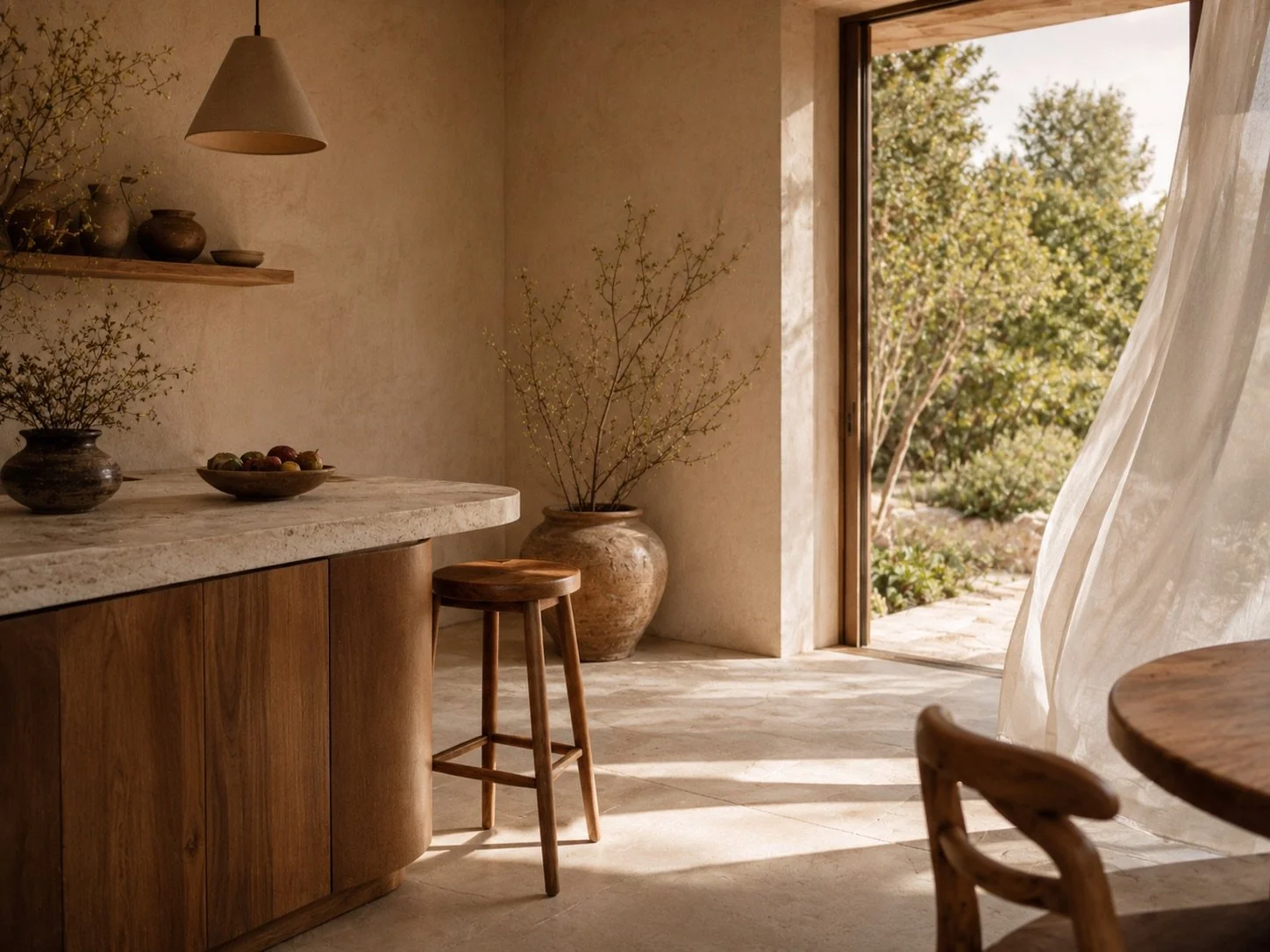
Plants can be wonderful, but biophilic design is much more layered. It may include natural light, views of greenery, organic materials, wood grain, stone, water, fresh air, natural color palettes, curved forms, fractal patterns, seasonal rhythms, and spatial arrangements that echo the safety and fascination we experience in nature.
Terrapin Bright Green’s widely referenced 14 Patterns of Biophilic Design describes biophilic design as a way to connect nature, human biology, and the built environment in order to support health and well-being. Their research framework links biophilic design with reduced stress, improved cognitive function, enhanced creativity, and restorative experiences.
Why Neuroaesthetics and Biophilic Design Belong Together
Neuroaesthetics helps us understand how the brain and body respond to a space. Biophilic design gives us a practical language for applying nature-based strategies inside that space.
Together, they help answer one essential question:
How can your home be designed to support the way you want to feel and live?
This is where design becomes more than decoration. A room may be beautiful in a photograph, but if it does not support your rhythms, your relationships, your sensory preferences, and your daily needs, it may never truly feel like home.
A neuroaesthetic and biophilic approach considers the full sensory experience: sight, sound, touch, scent, movement, temperature, light, memory, and meaning. It studies the subtle difference between a home that looks impressive and a home that helps you exhale.
Applied Neuroaesthetics in Everyday Interior Design
Applied neuroaesthetics is where the science becomes personal.
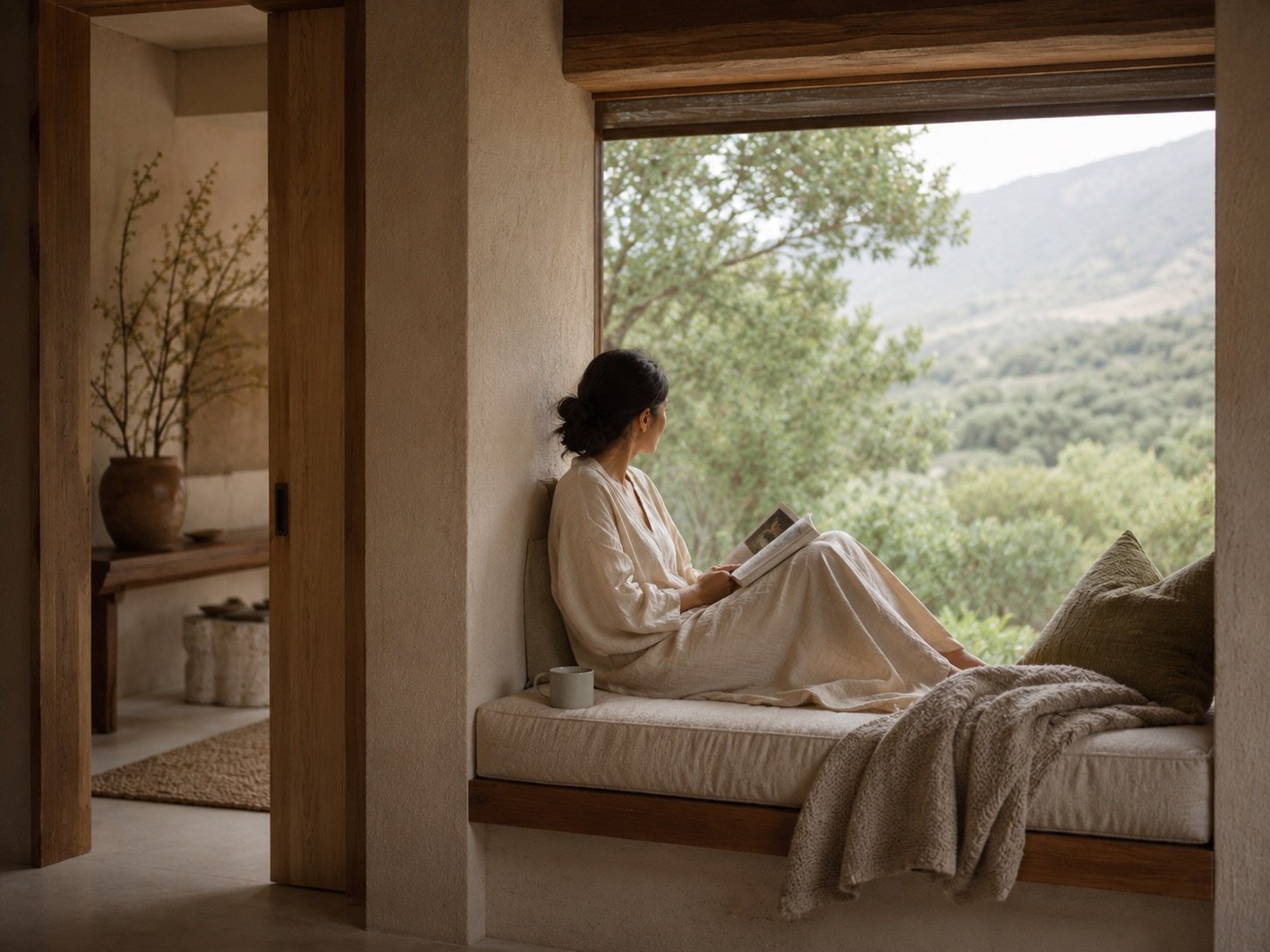
For one client, a restorative home may mean warm wood tones, soft acoustics, filtered morning light, and a tucked-away reading nook. For another, it may mean saturated color, bold art, layered pattern, and spaces that encourage entertaining. For a family navigating a life transition, it may mean a home that restores a sense of control, ease, and belonging.
This is why our process begins with the person, not the palette.
At Living Luxury Lab, we look at how you live, gather, work, cook, rest, move, and restore. Our ideal clients often value artisanal craftsmanship, timeless bespoke design, effortless functionality, educational guidance, and trusted professional support. They are not simply looking for a beautiful room. They are looking for a home with meaning.
That may include:
Layered lighting that supports both energy and evening calm.
Natural materials such as reclaimed wood, plaster, stone, wool, linen, or clay.
Biomorphic curves in furnishings, millwork, mirrors, or architectural openings.
Views and vignettes that guide the eye toward nature, art, or memory-rich objects.
Acoustic softness that reduces noise stress and supports conversation.
Spatial planning that improves movement, privacy, connection, and daily ease.
A palette that reflects not only style, but mood, energy, and purpose.
A Home That Helps You Feel Whole
The most meaningful homes are not designed around trends. They are designed around the people who live inside them.
They hold your rituals. They support your health-conscious routines. They welcome your guests. They make space for quiet, laughter, creativity, and transition. They reflect where you have been and make room for who you are becoming.
This is the promise of neuroaesthetic and biophilic design: not just a more beautiful home, but a more supportive relationship between you and your environment.
Because your home should do more than look finished.
It should help your nervous system soften.
It should invite your attention to settle.
It should make daily life feel more intuitive.
It should connect you to nature, memory, craftsmanship, and meaning.
It should help you feel Whole at Home™.
Ready to Create a Science-Backed Sanctuary?
If your home feels beautiful in pieces but not fully supportive of the way you live, it may be time to look beneath the surface. Through applied neuroaesthetics, biophilic design, and deeply personalized interior design, Living Luxury Lab help you to create spaces that are not only visually refined, but emotionally resonant and thoughtfully attuned to your well-being.
Your home is not just where life happens. It is one of the environments shaping how life feels.
Let’s design it with intention.