

The human brain is a pattern-seeking system. We are constantly scanning our surroundings for cues: Is this safe? Is this interesting? Can I rest here? Can I focus here? Do I belong here?
Certain patterns tend to feel especially compelling because they echo forms found in nature and the body. Your draft wisely identifies three important categories:
Biophilic patterns, such as fractals found in leaves, branches, shells, waves, and stone.
Biomorphic forms, such as curves and organic silhouettes that remind us of living bodies and natural growth.
Balanced symmetry and proportion, including visual structures that help the eye make sense of a space.
The goal is not to create a room that feels overly themed or artificially “nature-inspired.” The goal is to create organized complexity: enough order to feel calm, and enough interest to feel alive.
This is why a beautifully designed room often includes both coherence and fascination. Too much visual chaos can feel stressful. Too little stimulation can feel flat or lifeless. The sweet spot is a balanced composition: grounded, legible, and layered with moments of curiosity.
The Health Impact of Beauty and Nature-Informed Design
When people hear “wellness design,” they may think first of a home gym, a meditation room, or a filtered water system. Those can all be valuable. But the nervous system is also influenced by everyday design decisions: the morning light in your kitchen, the acoustics of your living room, the tactile comfort of your reading chair, the way your entry sequence welcomes you home.
Biophilic design research has associated visual connections with nature with reduced stress, improved emotional functioning, better concentration, and faster recovery. Terrapin’s pattern research also notes that views to nature may support lowered blood pressure and heart rate, reduced attentional fatigue, and improved mood.
This is why the “fountain of youth” idea is so intriguing—not because design reverses aging, but because well-designed environments can support the systems that help us feel more restored, connected, and resilient. A home that helps lower daily stress load, encourages better sleep routines, supports focus, and invites meaningful connection is not simply beautiful. It is life-giving.
Three Biophilic Design Patterns That Transform a Home
1. Complexity & Order
In nature, we rarely encounter blankness. We experience layers: branches, shadows, ripples, bark, grasses, clouds, and stones. These patterns are rich, but not random. They have rhythm.
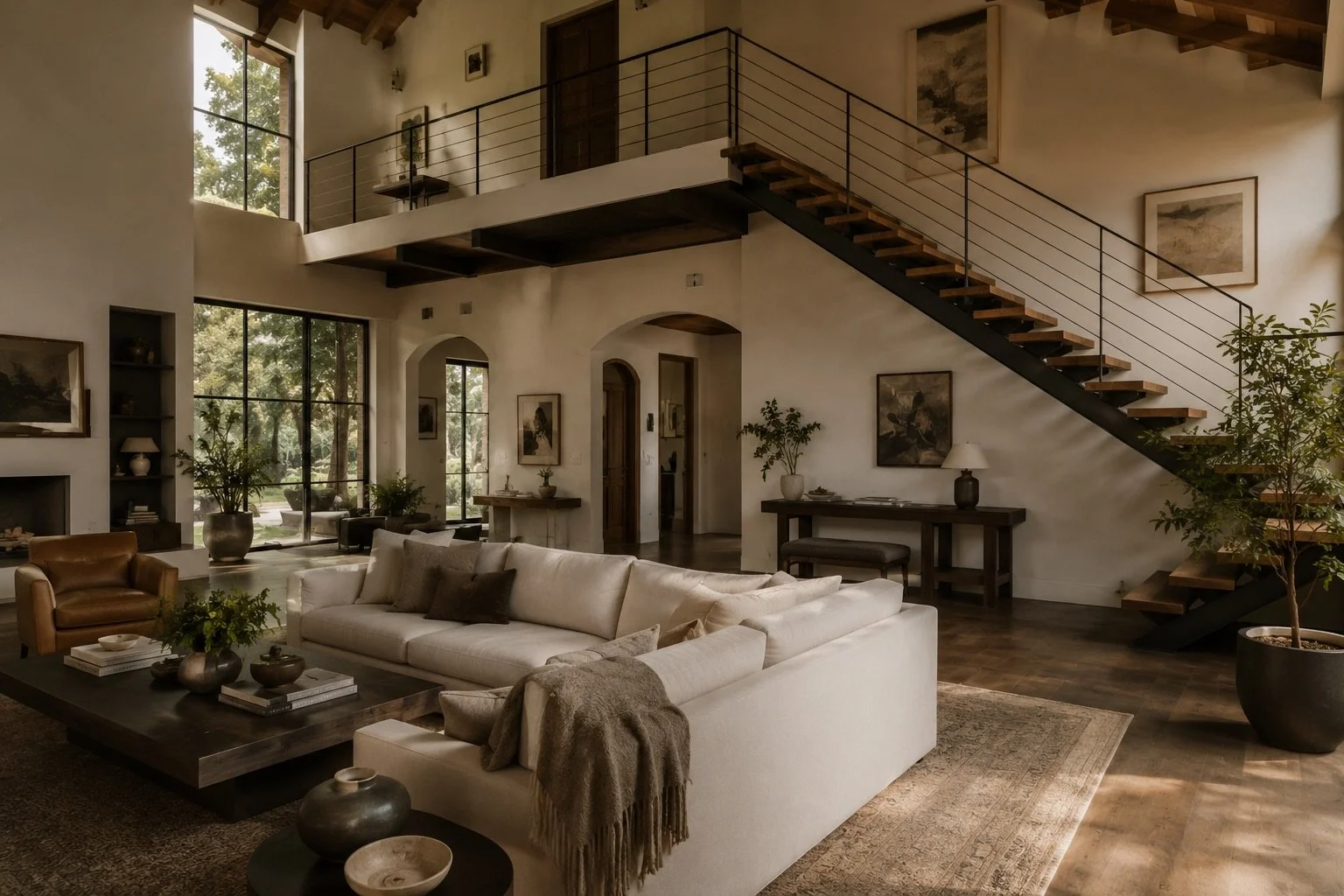
In the home, Complexity & Order can appear through a hand-knotted rug, veined stone, patterned tile, woven textiles, layered lighting, collected artwork, or architectural repetition. The experience is visually nourishing without becoming overwhelming.
This is one reason artisanal and vintage pieces are so powerful. They carry texture, story, irregularity, and evidence of the human hand—qualities that mass-produced interiors often lack.
2. Prospect & Refuge
Prospect means having a clear view outward. Refuge means feeling protected from behind or above. Together, they create one of the most instinctively comforting spatial experiences.
Think of a cozy chair tucked into a corner with a view across the room. A breakfast nook framed by windows. A primary bedroom where the bed feels protected, yet visually connected to natural light. A living room that allows you to see the garden while feeling held by the architecture.
Prospect and Refuge can help a space feel both open and secure—expansive, but not exposed.
3. Risk & Peril
This one surprises people. Why would we want risk in a home?
The answer is balance. Risk & Peril is not about danger. It is about a perceived thrill paired with reliable safety: a floating stair with secure railings, a dramatic overlook, a glass-framed view, a fireplace, or stepping stones over water.
These moments create alertness and fascination. When balanced with calming materials, natural textures, and thoughtful lighting, they can make a space feel memorable, dynamic, and alive.
Biophilic design reminds us that beauty is not merely something we look at—it is something our bodies experience. When a home is shaped with natural patterns, thoughtful proportion, sensory richness, and moments of both calm and wonder, it becomes more than a beautiful backdrop. It becomes a restorative environment: one that helps you feel settled, enlivened, and deeply at home.